
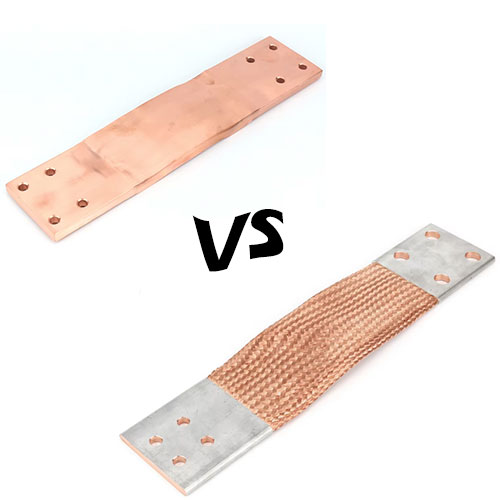
In power distribution systems, new energy equipment, and industrial electrical installations, conductive connection components play a vital role in ensuring stable current transmission. Among them, copper busbars and braided copper flexible connectors are two commonly used solutions, each designed for different working conditions and application requirements.
Understanding the differences between these two products helps engineers and system integrators choose the most suitable conductive solution.
Copper Busbars: Rigid Conductive Solutions for High-Current Applications
Copper busbars are rigid conductive components widely used in low-voltage power distribution cabinets, substations, transformers, switchgear, and photovoltaic grid-connection systems.
Key Features of Copper Busbars
Low electrical resistance, enabling efficient current transmission
High current-carrying capacity, suitable for stable, high-load operation
Simple structure, easy to install and maintain
Excellent mechanical strength, ideal for fixed installations
Copper busbars are typically installed in environments where vibration, movement, or displacement is minimal. Their rigid structure ensures reliable electrical contact and long-term stability in static power systems.
Braided Copper Flexible Connectors: Designed for Vibration and Movement
Braided copper flexible connectors are made from multiple layers of fine copper wires woven into a flexible structure. They are commonly used in applications requiring shock absorption, vibration resistance, and flexible electrical connection.
Key Features of Braided Copper Flexible Connectors
High flexibility, effectively absorbing vibration and thermal expansion
Excellent fatigue resistance, suitable for dynamic operating conditions
Reliable conductivity, even under repeated movement
Customizable structure, adaptable to complex installation environments
These connectors are widely applied in generators, motors, transformers, battery systems, new energy vehicles, rail transit, and industrial equipment, where rigid copper busbars may fail due to mechanical stress.
Choosing the Right Conductive Solution
The choice between a copper busbar and a braided copper flexible connector depends on actual operating conditions:
Use copper busbars when the system is stable, space is fixed, and high current efficiency is required
Use braided copper flexible connectors when vibration, thermal expansion, or mechanical movement is present
In many modern systems—such as photovoltaic power plants, energy storage systems, and electric vehicles—both solutions are often used together to achieve optimal performance and long-term reliability.