
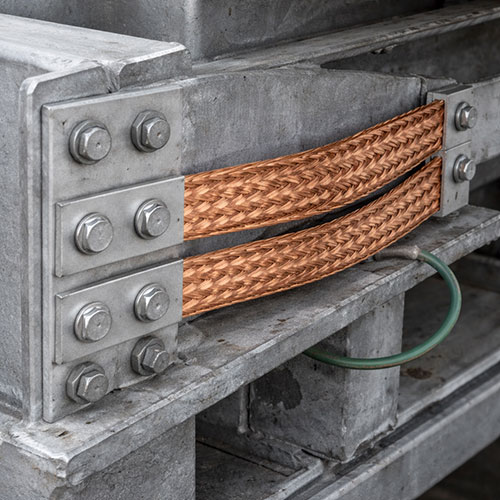
Braided copper connectors are widely used in bridge engineering, particularly in electrical grounding, lightning protection, and equipotential bonding systems. In modern bridge structures, reliable electrical connections are essential to ensure operational safety and protect structural components from electrical faults.
Due to constant exposure to traffic loads, wind, temperature changes, and environmental stress, bridge structures experience continuous vibration and thermal expansion. Braided copper connectors, made from multiple layers of fine copper wires, provide excellent flexibility and fatigue resistance. This allows them to absorb mechanical movement and vibration while maintaining stable electrical conductivity.
In bridge grounding systems, braided copper connectors are commonly installed between steel structures, grounding bars, expansion joints, and electrical equipment. Their low resistance ensures efficient current dissipation during lightning strikes or fault conditions, reducing the risk of damage to structural components and electrical systems.
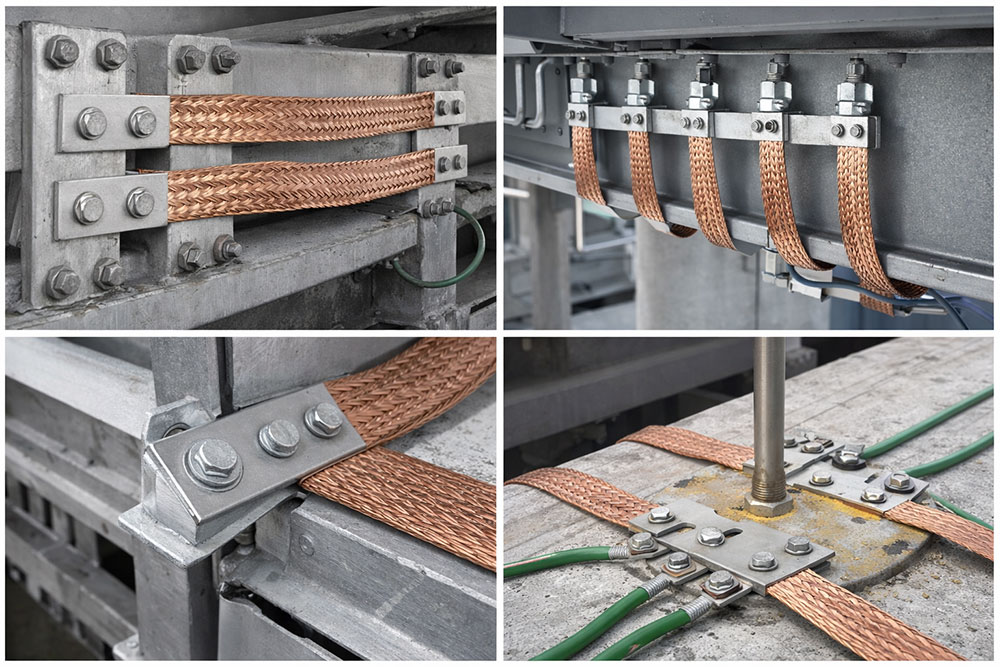
Compared with rigid copper conductors, braided copper connectors offer easier installation and better adaptability to complex structural layouts. Their corrosion-resistant surface treatment further enhances durability in outdoor environments, ensuring long-term stable performance.
As infrastructure projects continue to demand higher safety and reliability standards, braided copper connectors have become an indispensable conductive solution in bridge engineering and other large-scale civil construction projects.