
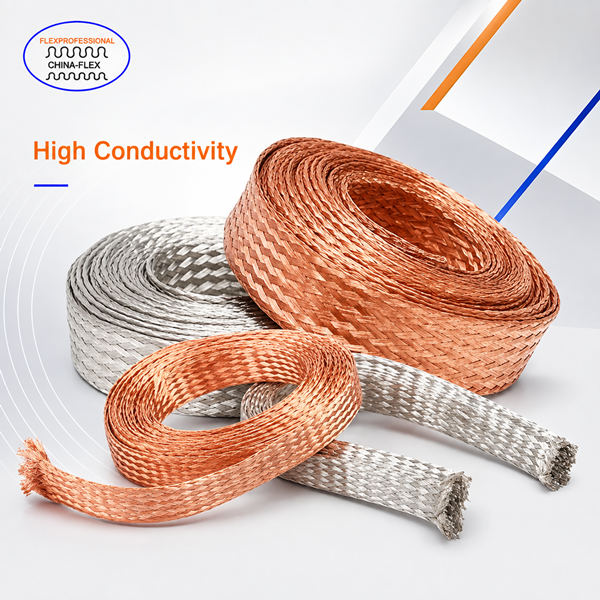
Copper braided wire is a flexible electrical conductor designed for applications that require high conductivity, frequent movement, vibration resistance, and reliable current transmission. It is widely used in medium- and low-voltage circuit breakers, switchgear, vacuum electrical equipment, mining explosion-proof switches, automobiles, locomotives, grounding systems, and other electrical products.
Compared with rigid copper conductors, copper braided conductors provide better flexibility and fatigue resistance. Their braided structure allows the conductor to bend and move repeatedly while maintaining stable electrical performance.
What Is Copper Braided Wire?
Copper braided wire is manufactured by braiding multiple fine copper wires into a flexible conductive structure.
Depending on the application, manufacturers can use:
- Bare copper wire
- Tin-plated copper wire
- Silver-plated terminals
- Customized copper terminals
The braided design combines electrical conductivity with mechanical flexibility, making it suitable for electrical connections where rigid conductors cannot accommodate movement or vibration.
Copper braided conductors are especially suitable for non-horizontal energized movement and applications involving repeated bending.
Electrical Performance of Copper Braided Wire
Electrical conductivity is one of the most important advantages of copper braided conductors.
At 20°C, the typical DC resistivity requirements are:
- Bare copper braided wire: ≤ 0.022 Ω·mm²/m
- Tin-plated copper braided wire: ≤ 0.0234 Ω·mm²/m
Low resistivity helps reduce electrical losses and heat generation during current transmission.
For electrical systems requiring reliable conductive performance, copper braided wire can provide a stable connection while also compensating for mechanical displacement.
Why Use Copper Braided Wire for Flexible Electrical Connections?
A conventional rigid conductor may experience mechanical stress when electrical equipment moves, vibrates, or switches repeatedly.
A copper braided conductor consists of many fine copper strands. This structure distributes mechanical stress across the conductor and improves its ability to withstand repeated movement.
The main advantages include:
- High electrical conductivity
- Low electrical resistance
- Excellent flexibility
- Strong fatigue resistance
- Good vibration resistance
- Reliable current transmission
- Easy installation
- Customizable dimensions
- Long service life
These features make copper braided wire particularly suitable for electrical equipment with moving conductive parts.
Flexible Copper Connection Structure
A typical flexible copper connection uses copper braided wire as the main conductor.
Copper tubes or copper terminals are installed at both ends of the braided conductor. The connection can then be formed through a controlled cold-pressing process.
Depending on customer requirements, the terminal surface can receive additional treatment such as:
- Tin plating
- Silver plating
- Other customized surface treatments
The terminal size, conductor length, width, thickness, and mounting holes can also be produced according to customer drawings.
This design creates a flexible conductive connection that combines mechanical adaptability with stable electrical performance.
Copper Braided Wire for Circuit Breakers
Copper braided wire is commonly used in medium- and low-voltage circuit breakers.
During switching operations, some conductive components inside a circuit breaker move repeatedly. Rigid copper connections may not provide enough flexibility for this type of movement.
A flexible copper braided conductor can accommodate the movement while maintaining continuous electrical contact.
Typical applications include:
- Moving electrical contacts
- Circuit breaker conductive connections
- Switchgear connections
- Flexible busbar connections
- Grounding connections
The high conductivity and fatigue resistance of braided copper make it suitable for frequent switching operations.
Copper Braided Wire for High- and Low-Voltage Electrical Equipment
Flexible copper connections are also widely used in high- and low-voltage electrical equipment.
Common applications include:
- Electrical switchgear
- Distribution cabinets
- Transformers
- Electrical control equipment
- Busbar systems
- Power distribution equipment
- Electrical cabinets
In these systems, a flexible copper connector can compensate for vibration, installation deviation, and thermal expansion.
Copper Braided Conductors for Vacuum Electrical Equipment
Vacuum electrical equipment often contains components that move during switching operations.
Copper braided conductors provide a flexible conductive path between these moving components.
Their combination of conductivity and mechanical flexibility helps maintain stable electrical contact while reducing stress on connection points.
This makes them suitable for vacuum circuit breakers and other vacuum switching devices.
Copper Braided Wire for Mining Explosion-Proof Switches
Mining electrical equipment often operates in environments with vibration, dust, mechanical shock, and demanding operating conditions.
Flexible copper braided conductors can provide reliable electrical connections in these environments.
They are commonly used in:
- Mining explosion-proof switches
- Electrical control cabinets
- Underground electrical equipment
- Power distribution systems
The flexible braided structure helps improve resistance to repeated vibration and mechanical movement.
Copper Flexible Connectors for Automotive and Locomotive Applications
Vehicles and locomotives generate continuous vibration during operation.
Electrical connections in these systems therefore require both conductivity and mechanical flexibility.
Copper braided wire can be used for:
- Automotive grounding
- Battery connections
- Electrical bonding
- Locomotive electrical systems
- Motor connections
- Vibration-resistant conductive connections
The flexible conductor helps reduce mechanical stress on terminals and connection points.
Flexible Copper Grounding Connections
Copper braided wire is also widely used as a flexible grounding conductor.
Compared with rigid grounding strips, braided copper grounding connections are easier to install around moving or vibrating equipment.
Typical applications include:
- Electrical cabinet grounding
- Machinery grounding
- Transformer grounding
- Switchgear grounding
- Motor grounding
- Vehicle grounding
- Industrial equipment bonding
The large conductive cross-section helps provide reliable grounding performance.
Bare Copper Braided Wire vs Tin-Plated Copper Braided Wire
Both bare copper and tin-plated copper braided conductors are commonly used.
Bare Copper Braided Wire
Bare copper offers excellent electrical conductivity and is suitable for many standard electrical environments.
Key characteristics include:
- Low resistivity
- High conductivity
- Good flexibility
- Cost-effective conductor solution
Tin-Plated Copper Braided Wire
Tin-plated copper braided wire adds a protective tin layer to the conductor surface.
It can provide improved resistance to oxidation and corrosion in demanding environments.
Its typical applications include:
- Humid environments
- Industrial electrical equipment
- Outdoor electrical systems
- Equipment requiring additional surface protection
The correct conductor type should be selected according to the electrical load, operating environment, and installation requirements.
Custom Copper Braided Wire and Flexible Connectors
Different electrical systems require different conductor dimensions and connection structures.
Copper braided conductors can therefore be customized according to customer specifications.
Common customization options include:
Conductor Size
Customers can specify the required conductor cross-sectional area according to current capacity.
Width and Thickness
The braid can be manufactured in different widths and thicknesses.
Connection Length
Flexible copper connections can be produced in customized lengths.
Terminal Dimensions
Copper tube and terminal sizes can match the customer’s installation dimensions.
Mounting Holes
Hole diameter, quantity, and spacing can be customized.
Surface Treatment
Available options may include:
- Bare copper
- Tin plating
- Silver plating
Special Connector Shapes
Flexible copper connectors can be designed according to equipment layout and installation space.
How to Select the Right Copper Braided Wire
When selecting copper braided wire, several factors should be considered.
1. Current Capacity
The conductor cross-section should match the required operating current.
2. Electrical Resistance
Low resistance is important for reducing energy loss and heat generation.
3. Flexibility Requirements
Applications involving frequent movement require a more flexible braid structure.
4. Installation Space
The width, thickness, and terminal dimensions should match the available installation area.
5. Operating Environment
Humid or corrosive environments may require tin-plated copper or additional surface treatment.
6. Terminal Configuration
The terminal design should match the equipment connection point.
By evaluating these factors, users can select a flexible copper conductor that meets both electrical and mechanical requirements.
Applications of Copper Braided Wire
Copper braided wire is widely used in electrical and industrial equipment, including:
- Medium-voltage circuit breakers
- Low-voltage circuit breakers
- Electrical switchgear
- Vacuum electrical equipment
- Mining explosion-proof switches
- Power distribution cabinets
- Transformers
- Electrical control systems
- Automotive electrical systems
- Locomotive electrical systems
- Flexible grounding systems
- Motors
- Battery connections
- Industrial machinery
- Flexible busbar connections
Its combination of flexibility and high conductivity makes it suitable for both static and dynamic electrical connections.
Benefits of Customized Copper Flexible Connections
Customized copper flexible connectors allow manufacturers and equipment users to match the conductive component directly to the equipment structure.
This can help improve:
- Installation efficiency
- Connection reliability
- Electrical performance
- Mechanical flexibility
- Equipment layout
- Maintenance convenience
Instead of modifying the equipment to fit a standard connector, the conductor can be produced according to the required dimensions.
FAQ About Copper Braided Wire
What is copper braided wire used for?
Copper braided wire is used for flexible electrical connections, grounding, circuit breakers, switchgear, transformers, vehicles, locomotives, motors, and other equipment requiring both conductivity and flexibility.
What is the resistivity of copper braided wire?
At 20°C, the DC resistivity of bare copper braided wire is typically no more than 0.022 Ω·mm²/m. For tin-plated copper braided wire, the DC resistivity is typically no more than 0.0234 Ω·mm²/m.
Why is copper braided wire flexible?
It consists of many fine copper wires woven into a braided structure. The individual strands can move slightly relative to each other, allowing the conductor to bend more easily than a solid copper conductor.
What is the difference between bare copper and tin-plated copper braided wire?
Bare copper provides excellent conductivity, while tin-plated copper adds improved resistance to oxidation and corrosion.
Can copper braided wire be customized?
Yes. Width, thickness, conductor cross-section, length, terminal dimensions, mounting holes, and surface treatment can be customized according to customer requirements.
Can copper braided wire be used for grounding?
Yes. Copper braided conductors are widely used for flexible grounding and electrical bonding because of their high conductivity and flexibility.
Can the copper terminals be silver plated?
Yes. Copper terminals can be silver plated when the application requires specific surface conductivity or connection performance.
Copper Braided Wire for Reliable Electrical Connections
Copper braided wire combines high electrical conductivity, low resistance, flexibility, vibration resistance, and fatigue resistance in one conductor.
For circuit breakers, electrical switchgear, vacuum equipment, industrial machinery, vehicles, locomotives, and grounding applications, a flexible copper connection can provide a reliable alternative to rigid conductors.
With customizable conductor sizes, terminal structures, plating options, and connection dimensions, copper braided wire can be manufactured to meet different electrical and mechanical requirements.